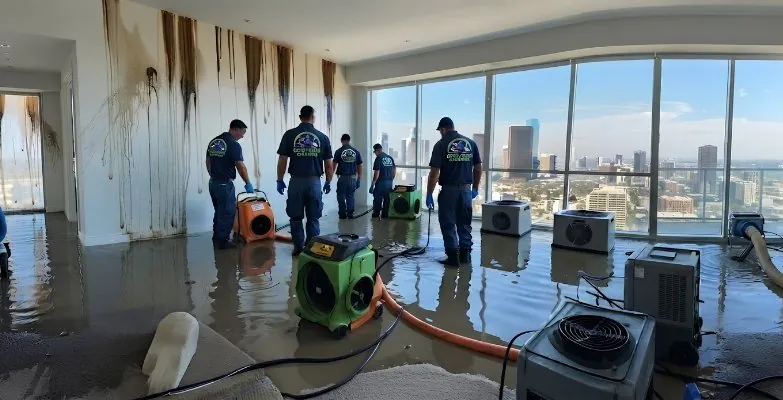
Wet carpet after a leak can sometimes be dried and saved, but it depends on where the water came from and how long it has been wet. Water from a clean source that is dealt with quickly is the best case. Contaminated water is the worst.
Step 1: Find out where the water came from
- Clean water, such as a broken supply line or a leaking water heater. Carpet and pad can often be dried if the water is removed quickly.
- Used water, such as a washing machine or dishwasher overflow. It may carry soap and soil, so treat it with more caution.
- Contaminated water, such as sewage or a drain backup. Carpet and pad that were soaked by this usually have to be removed and replaced. Do not try to dry them yourself.
Step 2: Look at how long it has been wet
Water keeps spreading into the pad, baseboards and drywall for as long as it sits, and mold can begin within about 48 hours. The sooner extraction starts, the better the odds of saving the carpet. See what to do in the first 24 hours.
Step 3: Check the pad
The pad under the carpet soaks up the most water and dries slowest. A common repair is to lift the carpet, replace the pad and re-stretch the carpet. Our carpet repair service covers pad replacement and re-stretching.
Signs the carpet may need to be replaced
- The water was sewage or other contaminated water.
- The carpet has been wet for several days.
- There is a musty smell that returns after drying.
- The carpet backing is separating or the carpet has shrunk.
- Mold is visible on the carpet or the pad.
What to do now
Stop the water, move belongings to a dry room and take photos before anything is moved. Then call a restoration company. We answer 24 hours a day and will tell you plainly whether your carpet can be dried or has to be replaced. See water damage and flood restoration.
Need help with this? See our water damage & flood restoration service or call 602-800-3850.